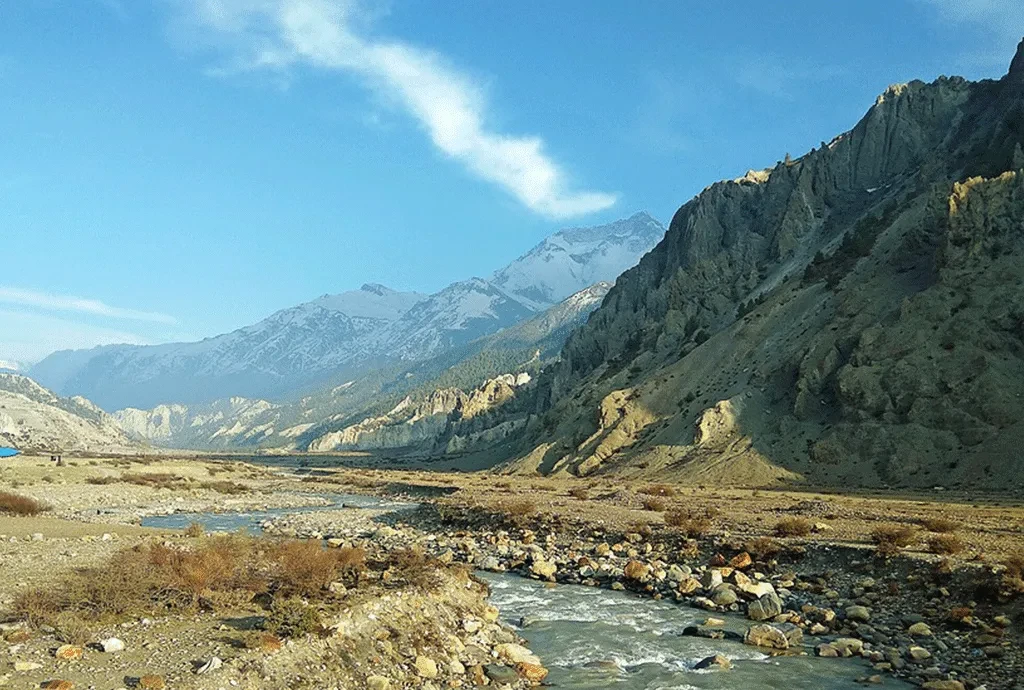
At its heart, the Langtang Valley Trek is a journey through a massive, glacial valley that takes you right up to the edge of the Tibetan border. It is often called the "Valley of Glaciers," and it offers some of the most dramatic mountain scenery in Nepal—without the crowds of the more famous routes.
What makes it truly special is how easy it is to access: you don't need to take any stressful domestic mountain flights. A private drive north from Kathmandu drops you straight at the trailhead, meaning your journey is smooth from day one.
Duration: 10 Days
The Route: A deep-valley corridor tracking the glacial waters of the Langtang Khola.
Maximum Elevation: 3,870m at the alpine settlement of Kyanjin Gompa, scaling to 4,984m at the Tserko Ri vantage point.
Physical Grading: Moderate to Challenging (Featuring a gradual acclimatization profile designed for fit enthusiasts who value pristine trails and remote mountain culture).
Hover over any day to see details
Upon clearing customs, your private OARPEAK coordinator meets you at the airport and handles all your luggage and transfers.
The afternoon is reserved for unwinding from international travel at your boutique hotel.
In the evening, we gather for a relaxed welcome dinner to introduce your senior expedition guide, review the route maps, and complete final gear checks.
Following an early morning breakfast, we depart Kathmandu for Syabrubesi via a scenic and comfortable private drive.
The route winds through terraced green hills and lush forests, tracking the course of the Trishuli River past waterfalls and deep river gorges.
As you pass through Trishuli Bazaar and climb through Dhunche, the road offers stunning, expansive viewpoints overlooking the Ganesh Himal and Langtang ranges.
Arriving in the beautiful valley gateway of Syabrubesi, you are welcomed by the first cool mountain breezes and prayer flags fluttering above the local rooftops.
Our trek begins with a scenic crossing of the Bhote Koshi River before we pick up the trail tracking the rushing Langtang River.
The morning features a relaxed, gradual ascent through shaded forest paths up to the riverside clearing of Bamboo at 1,970 m.
From here, a gentle climb brings us to the quiet ridge of Rimche at 2,400 m for our midday lunch break.
This pristine, protected forest corridor serves as a critical natural habitat where you can keep an eye out for langur monkeys, Himalayan black bears, or even the rare, endangered red panda.
Afterward, we make a steady climb through dense canopies of oak and rhododendron trees, concluding our day at the serene forest outpost of Lama Hotel.
Today we journey deeper into the core of Langtang National Park, starting with a steady morning ascent through crisp alpine forests of pine, oak, and rhododendron.
The trail climbs toward the open pastures of Ghodatabela at 3,030 m, where the dense canopy abruptly breaks and the valley widens into an expansive alpine landscape dotted with grazing yaks.
From here, the skyline is completely dominated by the striking, massive ice walls of Langtang Lirung (7,227 m) and Gangchenpo (6,388 m).
We wind through the traditional Tamang settlements of Thyangsyap and Chyamki, passing cascading waterfalls and immense mountain vistas.
This segment also crosses the historic path of the 2015 earthquake landslide, offering a moving and powerful reminder of the region's past.
We conclude the day at the beautifully rebuilt Langtang Village, a peaceful mountain community where guests can relax in a comfortable lodge and experience the deep-rooted cultural heritage of the valley.
We leave the village behind for a shorter but incredibly important trekking day designed to let your lungs adapt naturally to the thinner air.
The path winds through the quiet highland villages of Mundu and Sindum, with the entire route framed by ancient stone mani walls, fluttering prayer flags, and traditional Buddhist chortens.
By lunchtime, we reach Kyanjin Gompa, the spiritual heart of the entire valley, sitting directly beneath the staggering, frozen peak of Langtang Lirung.
After settling into our lodge, we step out to experience the quiet spiritual essence of the historic, ancient Kyanjin Monastery.
We finish the afternoon by touring the traditional local Yak Cheese Factory—one of the absolute oldest in Nepal—to sample fresh, authentic mountain cheese.
Today marks a dedicated mountain exploration day in the stunning high-altitude bowl of Kyanjin Gompa.
Taking your time and moving at a steady pace allows your body to adjust properly while you enjoy the breathtaking, rugged scenery along the way.
From Kyanjin Gompa, you can choose to hike to the lower Kyanjin Ri viewpoint at 4,300 m or continue further to upper Kyanjin Ri at 4,773 m for incredibly wide views of the Himalayas.
If you are seeking a greater physical challenge, there is also the option to climb Tserko Ri at 4,984 m, which rewards you with a spectacular 360-degree panorama of the Langtang peaks.
The mesmerizing views include Langtang Lirung, Dorje Lakpa, Gangchempo, and even Shishapangma in Tibet on clear days.
Along the way, we pass rugged glaciers and high alpine meadows where you may encounter blue sheep, Himalayan birds, and herds of yaks grazing in the crisp mountain air.
After returning to Kyanjin Gompa, you can relax with a warm cup of tea, chat with fellow travelers, and soak in the serene mountain atmosphere.
After experiencing the high-altitude serenity of Kyanjin Gompa, we begin our descent back down the valley.
Retracing our steps offers a completely new perspective on the landscape as the wide, expansive glacial vistas slowly give way to the intimate, lush corridors of the lower valley.
We pass through the high alpine meadows and gradually re-enter the deep oak and rhododendron forests, where the air grows noticeably warmer and the trails are filled with birdsong.
We will make stops in Langtang Village and Ghodatabela for lunch, providing one last chance to interact with the local community and keep an eye out for Himalayan langurs or red pandas hidden in the canopy.
The path is almost entirely downhill, so using trekking poles is recommended to assist with the descent.
By late afternoon, we arrive back at the quiet forest outpost of Lama Hotel, where we will enjoy a warm meal and settle in for a restful evening, reflecting on the journey through the heart of the valley.
Our final morning of trekking takes us down through the rest of the green forest corridor as we follow the crashing river trail one last time.
The descent is gentle and easy, letting you enjoy the crisp mountain air and the natural warmth returning to the valley.
We arrive back at the trailhead town of Syabrubesi by early afternoon, completely completing our foot journey through the national park.
This early arrival gives your guests plenty of time to take a proper hot shower, pack up their gear, and rest their legs.
In the evening, we throw a farewell celebration dinner at the lodge to thank the incredible local porters and field crew who made the trip possible.
After a relaxed breakfast at the lodge, our private, comfortable 4x4 vehicles pick you up directly from the trailhead.
We make the scenic overland drive back to the capital, leaving the quiet wilderness behind and tracing our way past the familiar rivers and terraced hillsides.
Upon arriving in Kathmandu, you will check back into your boutique hotel for a fresh change of pace and well-deserved city comforts.
The evening is yours to relax, walk the city streets, or enjoy a final celebratory farewell dinner hosted by OARPEAK.
Enjoy a leisurely morning in Kathmandu for last-minute exploring, relaxing at a café, or sourcing local souvenirs in the artisan markets.
Your private vehicle will pick you up from the hotel three hours prior to your international flight.
Our team will handle your final transfer to Tribhuvan International Airport, concluding your luxury wilderness journey with OARPEAK.
✓ Airport Pick-up & Drop-off: Private vehicle transfers for your international arrival and departure flights.
✓ Overland Transport: Private vehicle transport from Kathmandu to Syabrubesi and back.
✓ Kathmandu Hotels: 3 nights of boutique hotel accommodation in Kathmandu, including breakfast.
✓ Mountain Lodging: 6 nights of lodge accommodation during the trek on a twin-sharing basis.
✓ Meals on the Trail: All breakfasts, lunches, and dinners from the lodge menus during the trek.
✓ Daily Fresh Fruit: Fresh seasonal fruits served after dinner along the trail.
✓ Welcome & Farewell Dinners: Special welcome and farewell dinners at standard restaurants in Kathmandu.
✓ Trekking Guide: A licensed, English-speaking local trekking guide.
✓ Porters: Local porters to carry your main luggage (1 porter for every 2 guests, up to 15 kg per person).
✓ Crew Expenses: All wages, food, accommodation, and insurance for our guides and porters.
✓ Permits: Langtang National Park entry permits and TIMS registration cards.
✓ First Aid: A comprehensive medical kit and oxygen monitor carried by your guide.
✓ Trekking Gear: A complimentary OARPEAK duffel bag, a trekking t-shirt, and trekking poles for the trip.
✓ Taxes: All local government taxes and official service charges.
International Flights: Airfare to and from Nepal.
Nepal Visa: Entry visa fee, payable upon arrival at the Kathmandu airport.
Meals in Kathmandu: Lunches and dinners in the city, except for the welcome and farewell events.
Travel Insurance: Mandatory insurance covering medical expenses and high-altitude emergency helicopter evacuation.
Personal Gear: Personal clothing and gear, such as a daypack, hiking boots, and a sleeping bag.
Lodge Extras: Personal expenses on the trail like bar bills, sodas, bottled water, hot showers, Wi-Fi, and battery charging.
Extra Expenses: Additional accommodation or transport costs caused by flight delays, early returns from the trail, or personal choice.
Tips: Gratuities for your guide, porters, and drivers at the end of the trip.
The Langtang Valley Trek offers a rapid, spectacular ascent through dense sub-tropical forests up into a wide, glacier-carved alpine bowl. Because you reach the upper valley at Kyanjin Gompa (3,870m) relatively quickly, understanding seasonal shifts is paramount for packing and planning. Here is the operational breakdown of trail conditions:
| Trekking Window | Trail Comfort & Views | Daytime Walking | High-Alt Nights |
|---|---|---|---|
| 🍂 Autumn Best Peak October – November | Premium Visibility. Post-monsoon dry air treats hikers to extraordinarily sharp views of Langtang Lirung. The upper valley is fully operational, trails are crisp, and high alpine viewpoints are accessible. | 8°C to 14°C | -3°C to -10°C |
| 🌸 Spring Bloom March – May | Stunning Botanicals. The lower trails winding from Lama Hotel up to Ghodatabela transform as massive rhododendron and bamboo forests burst into bloom. Days are warmer, though afternoon cloud cover is common. | 10°C to 16°C | -2°C to -6°C |
| 🌧️ Monsoon (Rainy) June – September | Not Recommended. The narrow access canyon from Syabrubesi becomes slick, muddy, and plagued by leeches. Heavy mountain cloud blocks all alpine peaks, and roads to the trailhead frequently wash out. | 14°C to 22°C | 6°C to 12°C |
| ❄️ Winter Freeze December – February | Severe Climate. While low crowds offer deep solitude, the upper valley freezes over entirely. Deep snowpack frequently cuts off high day climbs like Tserko Ri, and many local teahouses shutter for the season. | 3°C to 8°C | -10°C to -18°C |
Porter & Duffel: We provide a complimentary OarPeak duffel during your Kathmandu briefing. Porters manage the load; you carry your personal daypack with daily essentials (sunscreen, water, camera, extra layers).
Rental Gear: Sleeping bags/down jackets available for $25/item. Note: Damage/Loss penalty of $200 per item.
Cultural Protocol: Form-fitting apparel (e.g., yoga pants) must be worn under modest layers while trekking through local villages to respect tradition.
Every OarPeak enquiry is answered by a guide — not a booking agent. Maximum 12 guests per departure.


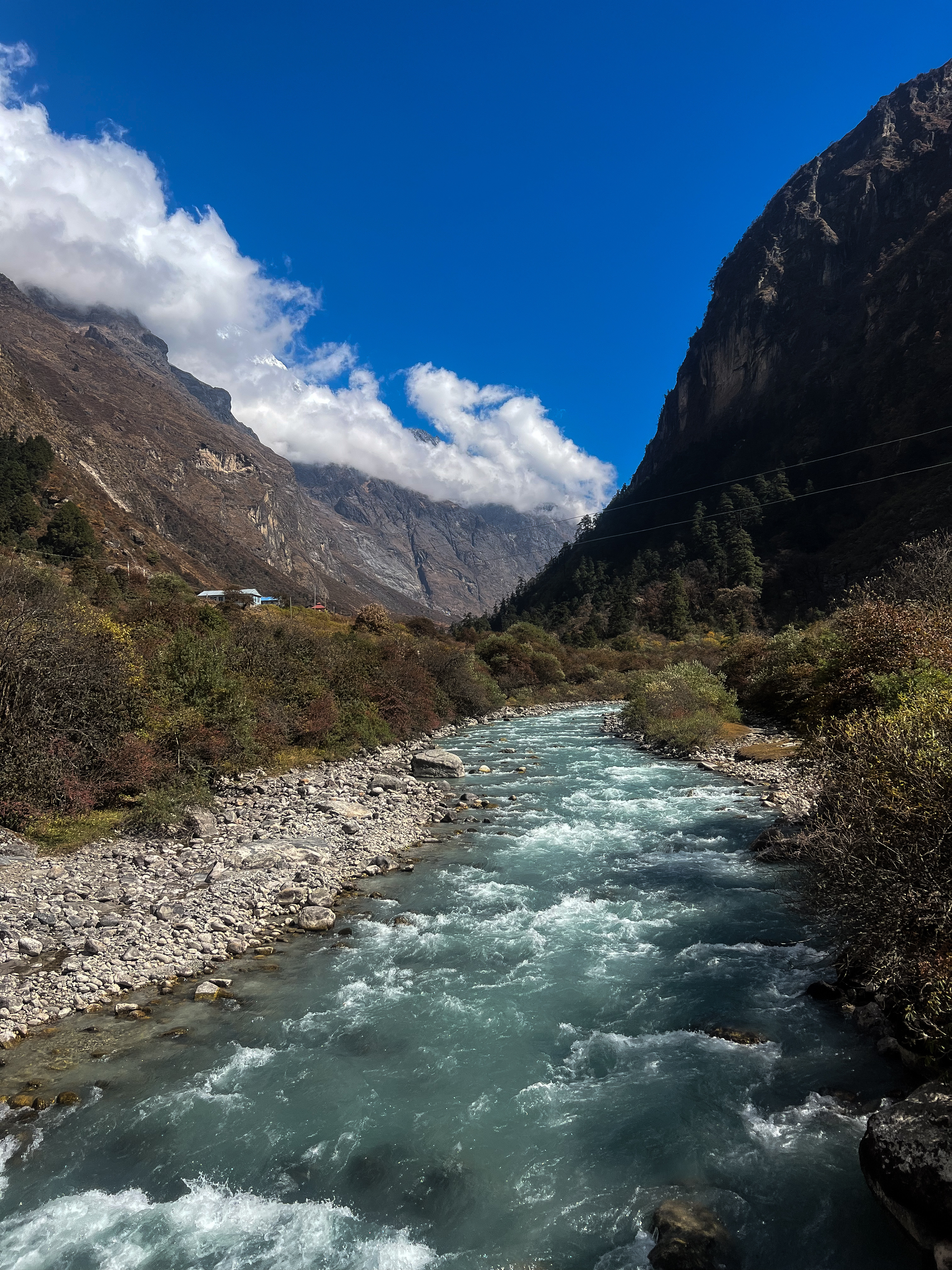

The Langtang Valley Trek is classified as a moderate high-altitude trek. While it features well-established trails and gradual ascents, you will be hiking for 5 to 7 hours a day over rocky terrain, steep stone stairs, and high ridges. Anyone with a good level of physical fitness, solid cardio endurance, and a positive mindset can comfortably complete this journey.
We arrange stays at the best available hand-picked local lodges and teahouses along the trail. Rooms are basic but clean and comfortable, typically featuring twin beds with foam mattresses, pillows, and blankets. As you climb higher to places like Kyanjin Gompa, facilities become more rustic, and bathrooms are usually shared rather than en-suite.
You will eat breakfast and dinner at the lodge where we stay, and lunch at a tea house along the trail. The menus offer a mix of local, Tibetan, and western dishes, including dal bhat (lentils and rice), noodles, pasta, eggs, and potatoes.
To ensure food safety at high altitudes, we highly recommend focusing on fresh, carbohydrate-rich vegetarian options rather than meat products.
For water, we provide safe drinking options. You can use your own reusable bottles or hydration bladders filled with boiled water from the lodges, or treat tap water using your own water purification tablets or filters.
Our local porters handle the heavy lifting so you can focus entirely on the trail. They will carry your main OARPEAK duffel bag, up to a strict limit of 15 kg (33 lbs) per guest. You only need to carry a lightweight daypack containing your essentials for the day, such as a water bottle, rain jacket, camera, sunblock, and personal snacks.
Yes, but these amenities require a small additional fee paid directly to the lodge owners (usually 200 to 500 NPR per service). Electricity for charging phones or camera batteries is available in common areas, and most lodges offer gas-powered or solar hot showers. Cellular network coverage (Ncell and Nepal Telecom) and basic Wi-Fi are available across most of the route, though connections can become unstable or drop entirely during poor weather.